





Universal
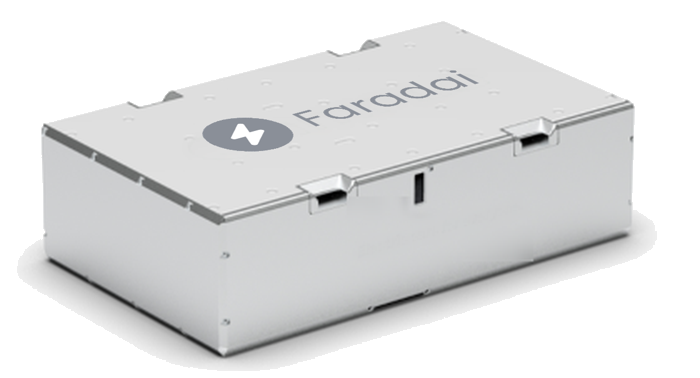
The module
About 5 kWh and 28 kg, sized for robotic handling. Each module carries its own electronics, so the chemistry inside is invisible to the vehicle.
 Faradai
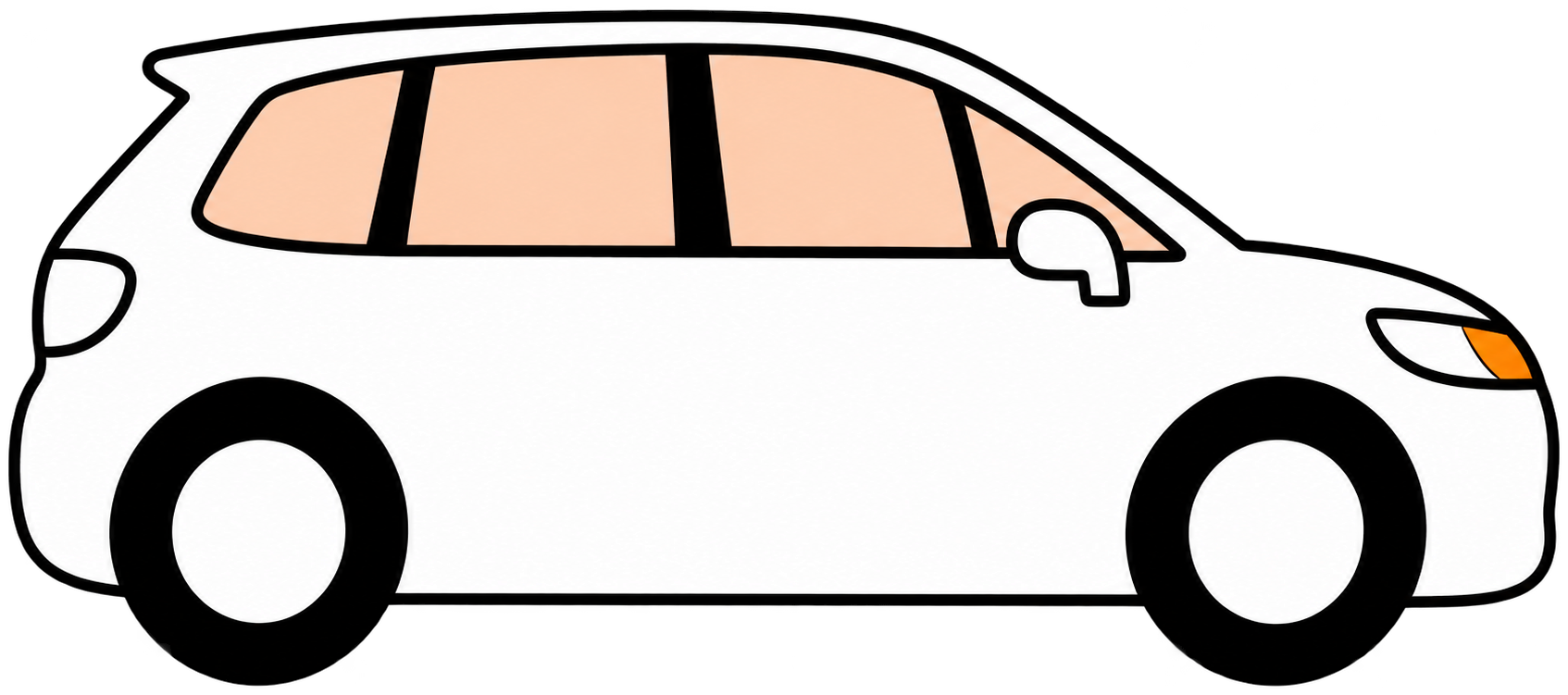
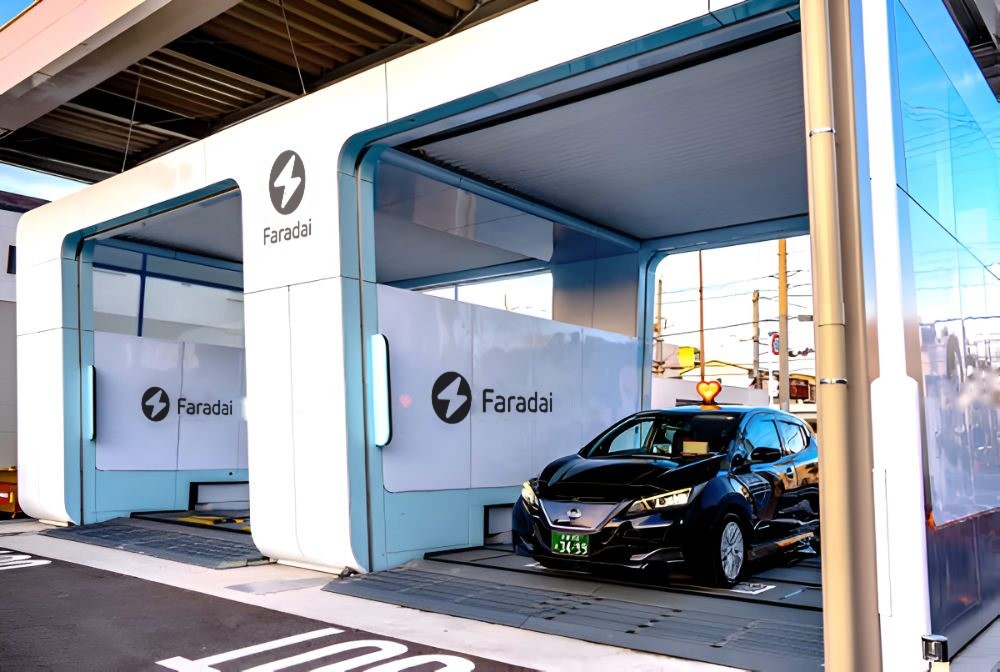
A vehicle drives into the station. Robots exchange its depleted battery modules for charged ones. It drives out. No grid upgrades, no vehicle redesign.
Two copies of one 100-vehicle fleet run the same streets. On the left, vehicles park at a charging depot when they run low. On the right, they drive through a Faradai station.
Everything below the adapter plate is the same on every vehicle.
About 5 kWh and 28 kg, sized for robotic handling. Each module carries its own electronics, so the chemistry inside is invisible to the vehicle.
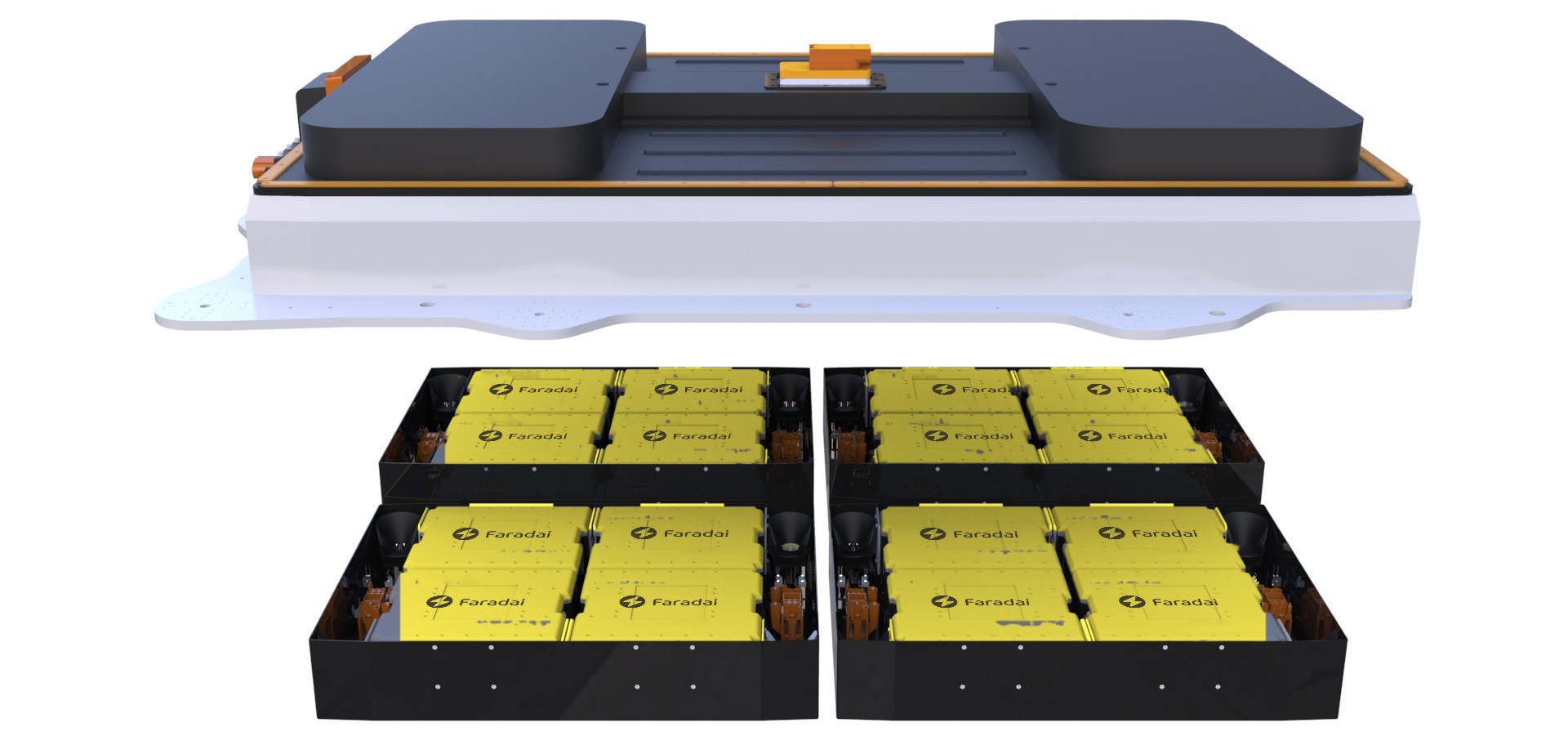
Modules sit in trays beneath an adapter plate shaped like the vehicle's original battery pack. The plate and trays stay with the vehicle. The modules swap.
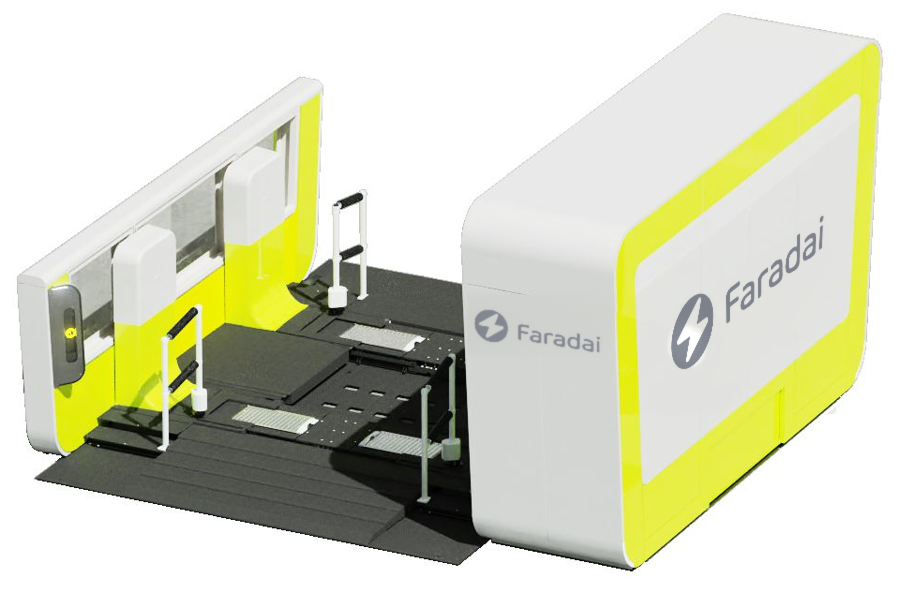
About 6 by 6 metres and outdoor-rated. Roughly a 100 kW connection and about 50 swaps a day, with up to 440 kWh of modules charging on site.
No megawatt charging, no new substation, no transmission upgrade to serve a depot.
Modules charge when the network has room, not the moment a vehicle arrives. The load becomes schedulable.
Putting 30 kWh into a vehicle in 5 minutes directly would take about 360 kW. The station draws 100 kW and its modules cover the rest.
A custom adapter plate for each vehicle model bolts in where the original battery pack sat. No redesign of the EV.

With swapping designed in from the start, the vehicle carries a smaller pack and is never held by its range or by a slow charge.
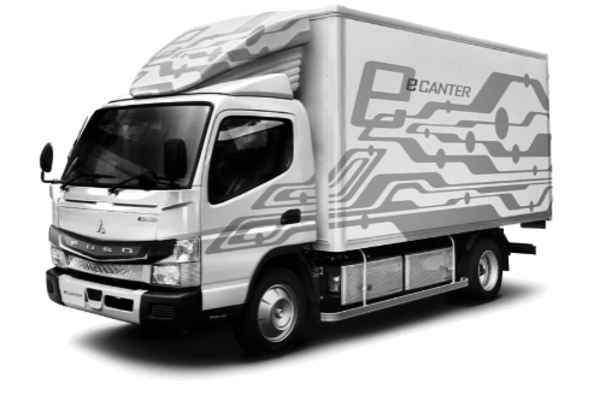
The same module goes into a city car and a delivery truck. Any cell chemistry, from any supplier.

Full energy in about five minutes instead of waiting at a charger, so drivers finish more trips every shift.
Time that used to go to charging goes back to paid rides.
The modules are ours and included in the service. The fleet never carries the degradation risk.
Full energy in about five minutes instead of waiting at a charger, so drivers finish more trips every shift.
Time that used to go to charging goes back to paid rides.
The modules are ours and included in the service. The fleet never carries the degradation risk.
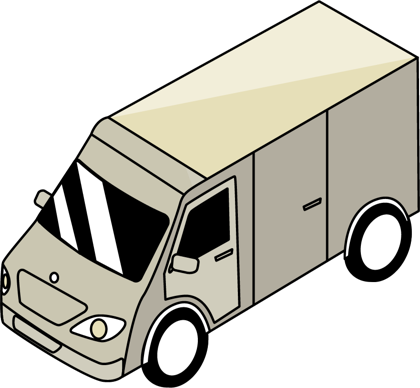
A five-minute swap between shifts keeps vans and light trucks moving. A parcel pilot in Japan ran 15% more routes.
A station draws about 100 kW. No megawatt chargers, no new substation.
The modules are ours and included in the service. Nothing to replace when a pack ages.

The swap is fully robotic. The vehicle drives in, the station exchanges the modules, and it drives out. No attendant, no cables.
About four hours a day of charging downtime goes back to paid service.
With swapping designed in, the vehicle carries a smaller battery pack and is never held by a slow charge.
Piloted with fleets in the Bay Area, Japan and Madrid.
Certified as an automotive product: ECE R100 vehicle-level homologation and UN38.3 transport certification.
Vehicle models, daily kilometres and routes. That is enough for us to size the pilot.
An adapter plate for each of your models, and the number of modules your duty cycle needs.
At your depot or a nearby Faradai site. We install, run and maintain them.
A usage fee. No equipment to buy.
Hardware in hand today: about 400 battery modules, enough for roughly 100 vehicles, plus four swap stations.

We will come back to you with a pilot sized to your fleet.